
#151: Matinal City
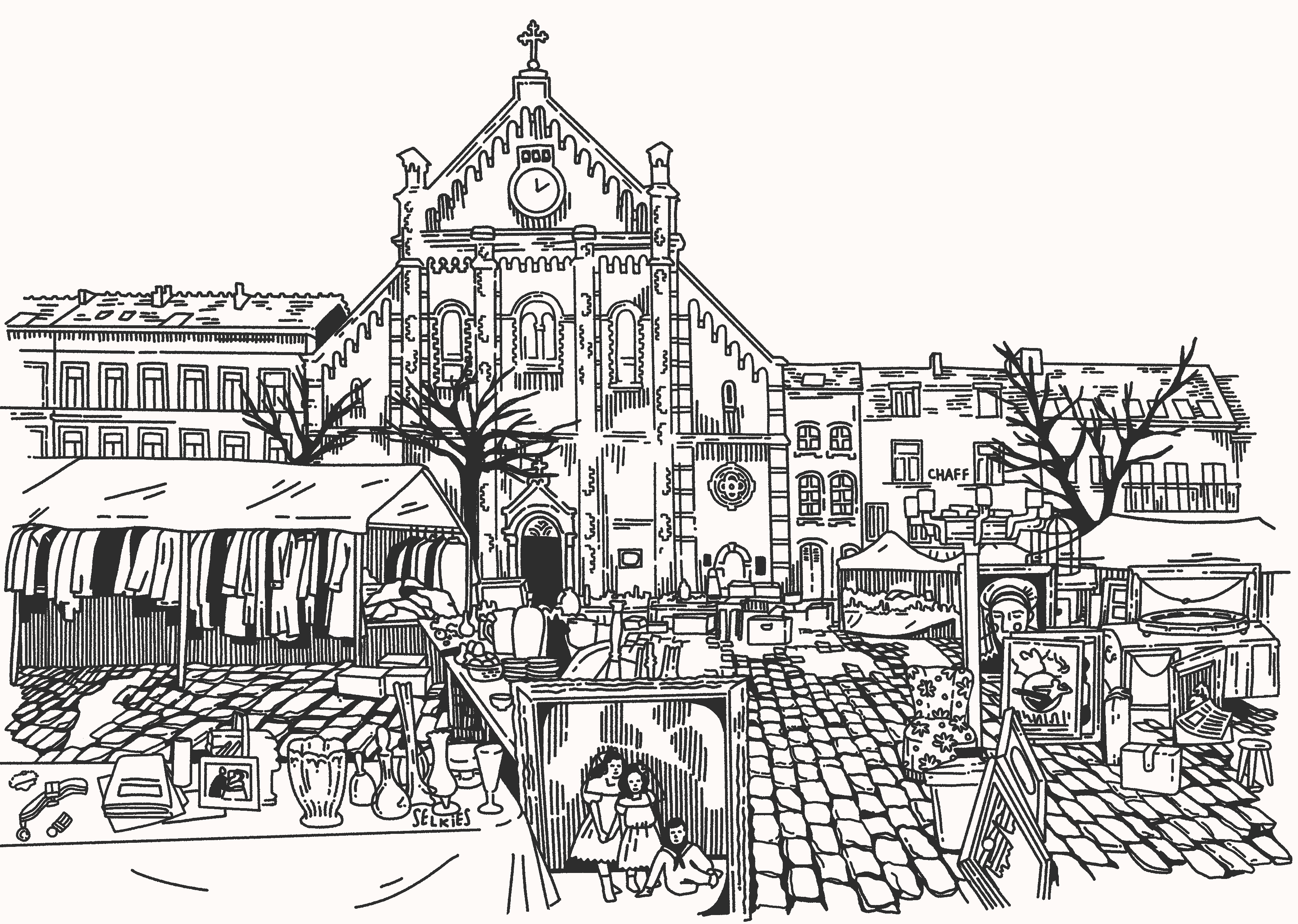
Le Chineur & Le Clef D'Or, Place Jeu de Balle, Saturday morning

Thanks for reading - I’m writer Eoghan Walsh and this is my weekly free-to-subscribe newsletter about life in Brussels. If you like it and you’re not already subscribed, you can sign up here!
Here’s another short excerpt from the latest edition of PINTJES, the award-winning zine Brussels-based illustrator Selkies and I produce about Brussels café culture. If you missed out on a copy at the launch in December and live in Brussels, drop me a line and we can do business ;).
The sun is inching up the sky now, and the gazebos are pitched. They’ll be needed; there are clouds gathering of a heavy, portentous grey. But they’re yet to break, and on the terrace of La Chineur, a man and his two children are negotiating breakfast, coffee and pistolets. Inside, by the big window separating café from market, a pair of bedraggled Americans in matching wax jackets eat their hot breakfast of omelettes, two plastic bags on the table alongside half-drunk ribbeke glasses of Jupiler dressed in broken lacing.
A sign on the wall above a row of tobacco brown banquettes says the potage du jour is onion. Underneath a government ordinance prohibiting drunkenness in the bar a gaggle of older men are talking loudly about their adventures in Marseillais and Kathmandu.
Otherwise Le Chineur is tidy, almost sparse; only the Advocaat-yellow enamel tables hint at the second-hand chaos on the café’s doorstep. In fact, so orderly is the place it’s easy to miss the kitchen, hidden behind a partition and stacked with pots and pans and plates next to Jupiler and Stella taps, a fan wafting a spicy mist over the rest of the café.
It’s breakfast time next door at La Clef D’Or too, only here it smells like thick gravy and the chalkboards are advertising “Tartines au fromage blanc: €10” and the menu has bread and butter for a fiver. There’s Hachis Parmentier and Boulettes sauce tomate too - food to fill your stomach and keep you warm before a long day out on the square.
Contrary to the latest media reports, La Clef D’Or is alive and well; if it’s carrying scars from its recent dice with death, the café is hiding them well. Feeling cosier and more conspiratorial than its next-door neighbour, even if that’s just an optical illusion, the Clef D’Or shares the same decor - neon signs for Rodenbach and Coca-Cola, brewery mirrors for Beck’s, and sunbleached photos of the old market alongside a triptych of photographs signed by Le Grand Jojo himself. Like Le Chineur it seems to have vaccinated itself with decades of good housekeeping against the chaos of the fleamarket.
A waiter in pinstripe shirt and wide patterned tie tucked into his apron shuffles over the chequerboard floor between dark-stained tables. His shoes are polished bright black, partially covered by the overhang of his wide pleated trousers. A snatch of conversation with a group at another table suggests his name is Abdel.
At another table halfway along the bar is a group of Dutch speakers, Vlamingen. The flea market is motoring now, and these are early-morning treasure hunters who decamp to the bars around the square before high-tailing it out of Brussels and back to the exurbs, their booty already secured before elevenses. It’s easy enough to spot their type, their uniform. Comfortable shoes, warm jackets, snug polo shirts, baseball caps and record bags slung over the backs of their chairs or sagging by their feet. One of them complains the market is quiet, before pulling a faded beer mat from his bag to nods of affirmation from the rest of his party.
The metal front door rattles. Two stout gentlemen, one in a flatcap and the other in a taut black suit jacket, waft into the place on a draft of young man’s deodorant and a hearty “Helaba” and “een koffie!” directed at the waiter. Outside, the heavens open. I can see through the window stallholders standing with hands in pockets, faces turned beseechingly to the downpour.
Today will be a long day.
Nice text. Any reference to Grand Jojo makes my day.
Brilliant sensory mapping here. The juxtaposition of that tidy café interior against the flea market chaos outside says alot about how these old spots survive by being little islands of routine. I've noticed the same thing at markets back home where the regulars move through like tey know something tourists don't.